
Start Here / Step 7: Track, Improve & Scale
Campaign Optimization Decision Tree
Find the earliest meaningful constraint and make one measured change.
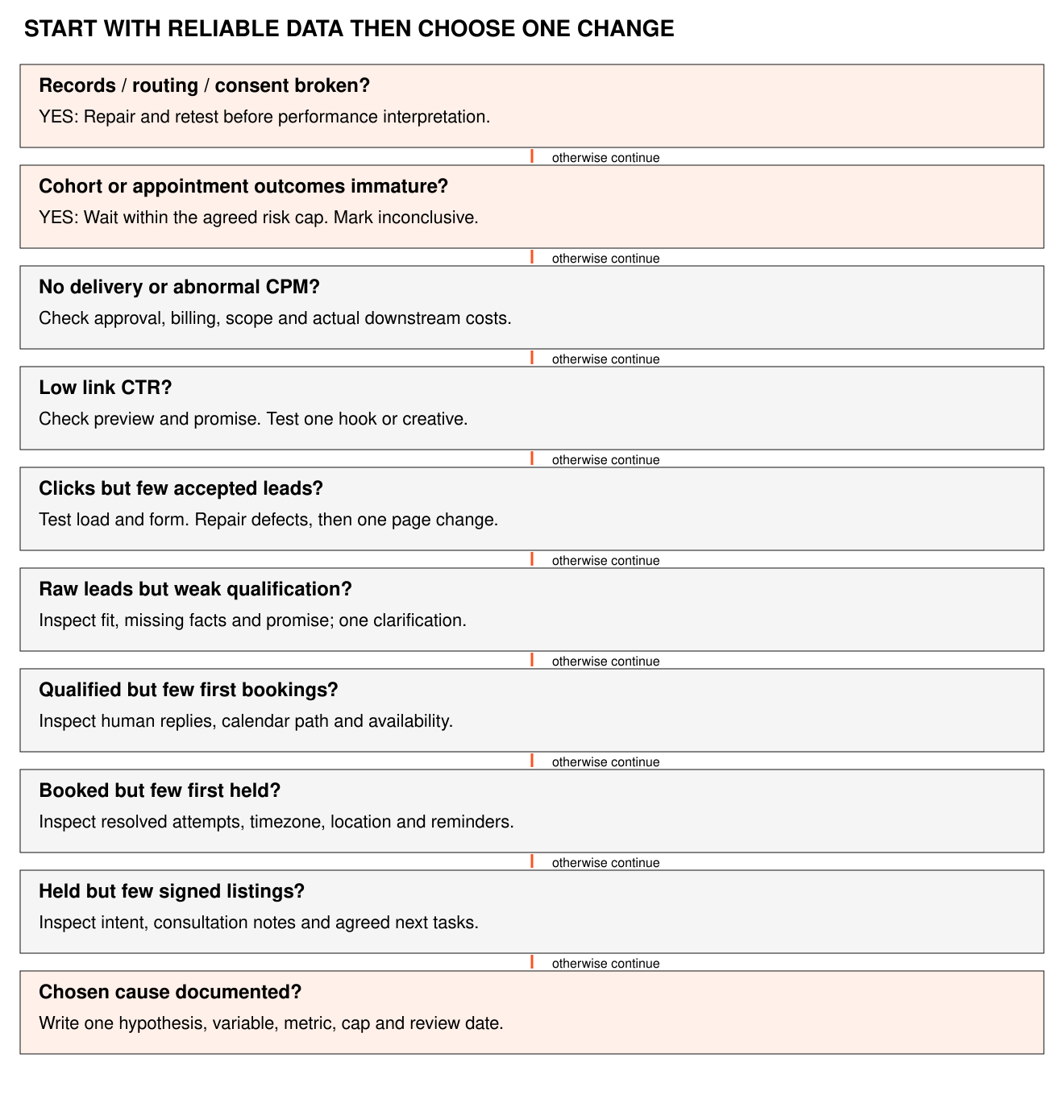
Use the accompanying visual decision tree
Start with operational reliability. If records, consent, tracking, or routing are wrong, repair those before interpreting performance. Next check whether the outcome has had time to occur. Use your own planning targets and actual baseline, not a fabricated industry average.
Branches and first actions
No delivery: check approval status, billing, schedule, asset access, and whether the selected geography and event are eligible. Correct the documented issue. Do not duplicate a rejected campaign to evade review. High CPM versus your comparable baseline: check reporting scope, placement mix, delivery volume, geography constraints, and whether CTR/quality actually deteriorated. A higher CPM with better qualified economics can be acceptable. Do not change targeting based on CPM alone. Low link CTR: verify the ad preview and relevance of the promise to the resource. Test one opening hook or one creative treatment. Keep the page and follow-up fixed. Clicks but few page loads: check redirect, load failure, mobile behavior, and measurement. Repair those before rewriting the offer. Page loads but few raw leads: submit the form yourself, verify friction and promise clarity, then test one form field or headline only if the process works. Raw leads but few qualified seller opportunities: inspect legitimate samples, out-of-area incidence, missing answers, and the offer's intent. Clarify one qualification question or one offer promise; do not broaden the definition to improve the metric. Qualified opportunities but few first bookings: check reply handling, whether the calendar link was offered appropriately, near-term availability, and timezone clarity. Test the documented constraint, such as more realistic appointment availability. Booked but few held: inspect resolved attempts, pending appointments, time/location confusion, reminder errors, and seller cancellations. Repair confirmation logic or test one reminder change. Do not count future bookings as no-shows. Held but few listings won: review seller intent, property fit, recorded conversation outcomes, follow-up tasks, pricing expectations, and sales process. Improving ad CTR cannot repair a missing post-consultation task. Listings won but little cash: inspect closing delays, cancellations, commission terms, and attribution. Do not classify signed listing GCI as collected commission.
After choosing the branch
Open the corresponding deeper Seller Campaign Troubleshooting Guide section. Write the one-variable test in Seller Ad Testing Tracker. If evidence is inconclusive, wait within the cap or improve measurement. Budget increases require Scaling Checklist, even if one ad looks attractive.
You’re done when
You have selected one evidence-supported action and written its test in Seller Ad Testing Tracker.
Support reference R17